
If you’ve seen circular marks on someone’s back after a massage or spotted them on an athlete during a competition, you’ve probably wondered what causes them. Those marks come from cupping therapy — and despite how they look, they’re not bruises in the traditional sense. Here’s what’s actually happening, and what to expect if you try cupping yourself.
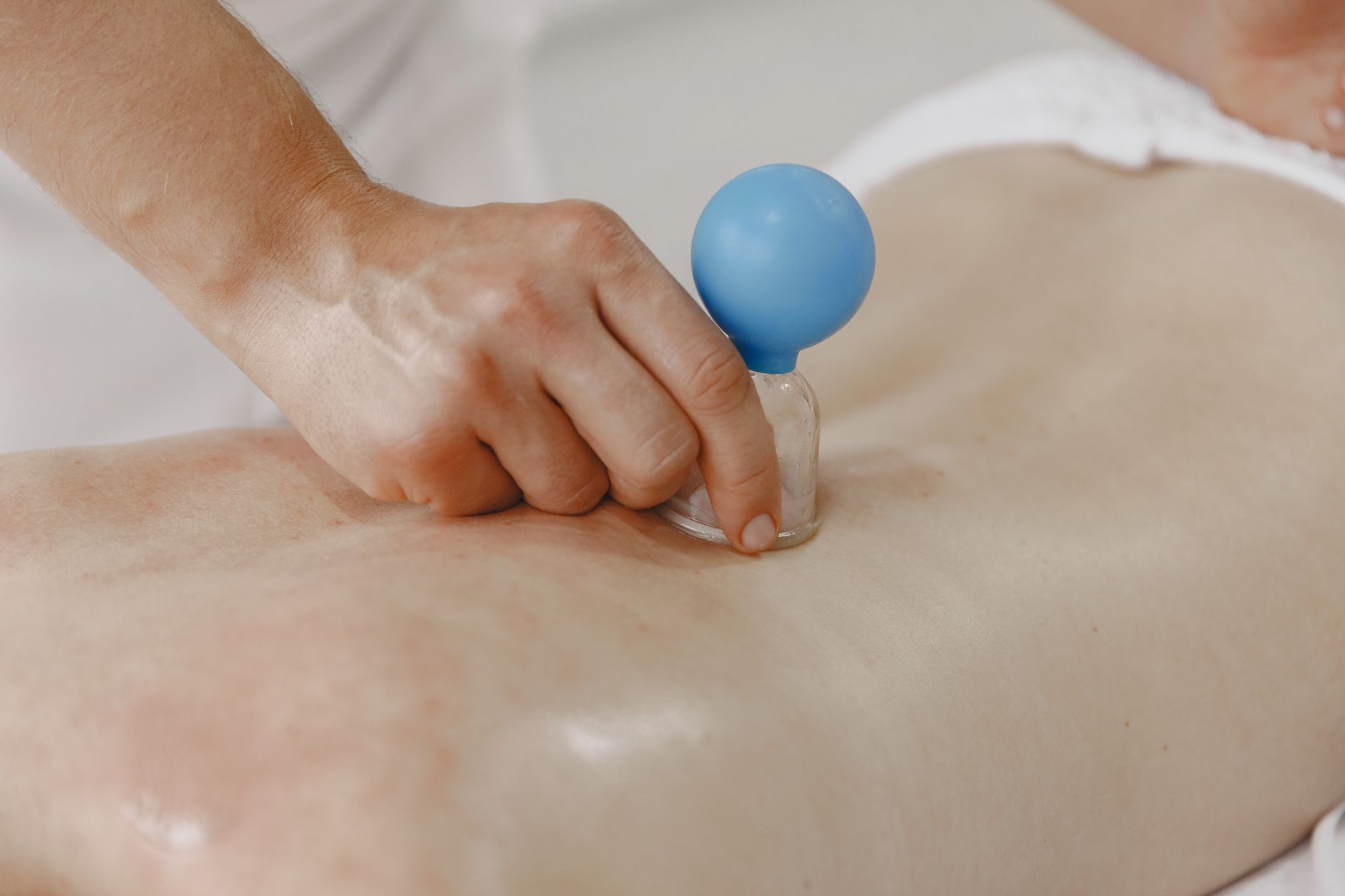
Photo by Gustavo Fring on Pexels
Cupping is a traditional technique that uses cups placed on the skin to create suction. It is commonly used for muscle tension and pain, although research on its effectiveness is still limited. At Queen’s Therapy, we offer two types as part of our acupuncture services:
The circular marks left after cupping are caused by the suction drawing blood to the surface of the skin — similar to how a hickey forms, though the mechanism and intent are different. They’re typically not painful and are considered a normal, expected response to treatment rather than an injury.
This varies from person to person and can depend on factors such as the intensity and duration of suction. Marks can range from a light pink that fades within a day or two, to a deeper purple that takes a week or more to resolve. The color and intensity of cupping marks can vary between individuals and treated areas.
Cupping is often used alongside acupuncture for:
It’s not recommended for everyone — your practitioner will check in about your health history before treatment to make sure it’s a good fit.
Most clients describe cupping as a pulling or tight sensation rather than pain. Let your practitioner know if the suction feels too intense at any point.
They look similar, but cupping marks come from suction drawing blood to the surface rather than impact trauma. They typically aren’t tender to the touch the way a bruise is.
This depends on your goals and how quickly your marks fade. Many clients space sessions a week or more apart, especially if marks are still visible from a previous treatment.
Curious to try it for yourself? Book a cupping or acupuncture session at Queen’s Therapy in Coquitlam.